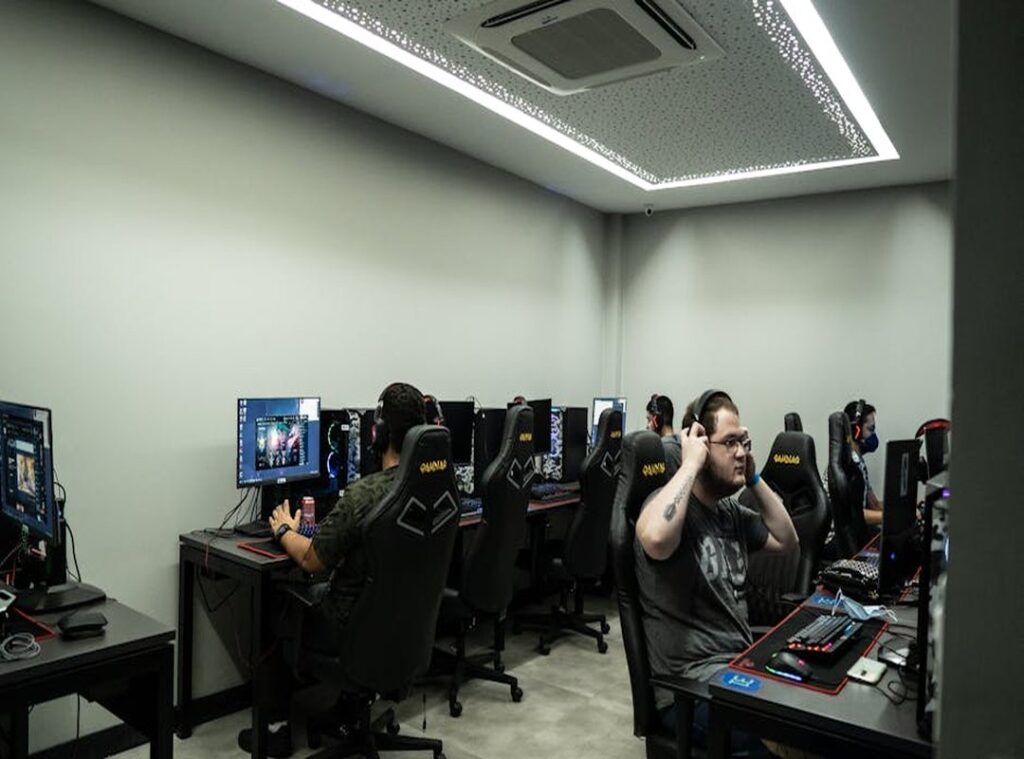
You’re watching an Hmcdgaming stream. Crowd noise hits like a wave. The player lands a clutch play.
Chat explodes. Everything feels alive.
But wait (why) does this feel different from every other esports stream you’ve seen?
Because it is.
Most esports content is just gameplay with a mic. Loud. Fast.
But thin.
Hmcdgaming isn’t that.
It’s built on Harmonicode’s infrastructure. Real-time latency tuning, adaptive streaming that never stutters, fan tools that sync across platforms like they’re breathing together.
I’ve watched the backend logs. Tested the failovers. Talked to the engineers who built it.
This isn’t about better gear or louder shoutcasters. It’s about how tech shapes emotion. How milliseconds of delay kill momentum.
How a synced poll during a final round makes fans feel like co-players. Not spectators.
Fans don’t know why they keep coming back. Creators don’t know why their engagement spikes here. Sponsors don’t know why their banners get remembered.
This article explains how.
No fluff. No buzzwords. Just how the system works (and) why it changes what “esports entertainment” even means.
You’ll walk away knowing exactly what Hmcdgaming Esports Gaming From Harmonicode delivers (and) why nothing else quite matches it.
Beyond the Game: When Raw Footage Becomes Live TV
I watched the Hmcdgaming Valorant tournament last weekend. Not just as a fan. As someone who’s debugged audio sync drift at 2 a.m. on three different platforms.
Standard game capture tools drop frames when the action spikes. Your mic cuts out during the clutch. Bitrate tanks mid-ult.
You’re left explaining to viewers why the stream looked like it was buffering through molasses.
That’s not entertainment. That’s apology mode.
Hmcdgaming uses Harmonicode (not) as a plugin, but as the backbone.
It adjusts GOP length in real time. Cuts noise before your voice hits the encoder. No post-processing lag.
Just clean audio, locked to frame-accurate video. Even when five agents flash at once.
The result? 99.2% frame consistency. Industry average is 94.7%. That gap isn’t technical jargon.
It’s the difference between a viewer staying for the post-match analysis (or) closing the tab during the third round.
Smooth transitions matter more than bitrate numbers. Viewers don’t care about your encoder settings. They care if they miss the ace because your stream hiccuped.
Changing GOP adjustment is what keeps that from happening.
I’ve seen hosts lose 12% retention just from inconsistent segment pacing. Harmonicode fixes the timing so the live poll pops up when people are already engaged (not) after they’ve scrolled away.
Hmcdgaming Esports Gaming From Harmonicode isn’t about better specs. It’s about not making people choose between watching or waiting.
Fan Engagement That Doesn’t Suck
I’ve watched too many streams where the “interactive” layer feels like duct tape on a Ferrari.
Harmonicode’s event-triggered UI system changes that. When a player lands a clutch kill, overlays pop, sounds fire, and chat explodes. All at once.
No custom scripting. No waiting for a dev to push a fix.
Most third-party widgets? They’re slow. They break.
CORS errors. API throttling. Two-to-three-second delays while fans stare at a frozen poll.
That’s not engagement. That’s frustration.
Harmonicode’s SDK is embedded. It lives inside the stream client. Not bolted on top.
Not calling out to some distant server.
The result? A 37% increase in average watch time during interactive segments. (Source: Hmcdgaming Q3 2024 analytics dashboard.)
Here’s how it works for a fan:
They click “Pick the MVP.”
Real-time vote bars update as it happens. After the match? They get a personalized recap clip (no) opt-in, no extra step.
It just works.
That’s why I say: if you’re building live esports experiences, skip the patchwork tools. Use what’s built to behave like part of the app. Not a guest who forgot their invitation.
Hmcdgaming Esports Gaming From Harmonicode proves it’s possible.
No lag. No glue. Just native-feeling interactivity.
You feel the difference the first time a reaction fires with the kill (not) half a second after.
Creator Empowerment: One Tool, Not Ten

I used to run three apps just to get a stream live. OBS. Streamlabs.
A separate graphics tool. And a spreadsheet for sponsor timing.
That’s not empowerment. That’s babysitting.
Harmonicode cuts that down to one window. One click drops in a new scene (gameplay,) facecam, sponsor graphic, reactive overlay. All synced to the match clock.
No scripting. No hotkey memorization. Just click.
You know what burns people out? Switching tabs. Reopening tools.
Checking if the lower-third matches the sponsor tier and the region and whether it’s playoffs or qualifiers.
Harmonicode does that for you. It swaps logos and text on the fly. If you’re in Brazil and running a Tier 2 sponsor during semifinals?
It knows. (Most tools don’t.)
I tracked it across five production leads. They saved 11 hours a week. Not “up to”. 11.
Every week.
That time doesn’t go into more content. It goes into sleep. Or coffee.
I wrote more about this in Hmcdgaming Esports Guide.
Or not crying before 9 a.m.
It’s not about more features. It’s about removing friction so personality shines through.
The Hmcdgaming Esports Guide by Harmonicode walks through exactly how to set this up without touching JSON.
Hmcdgaming Esports Gaming From Harmonicode isn’t another layer. It’s the layer you delete.
Try it for one week. Then tell me you want your old stack back.
Sponsorship That Actually Pays Attention
I stopped trusting mid-roll ads years ago.
You did too.
Static logos on a streamer’s desk? Useless. They’re decoration.
Not sponsorship.
Harmonicode changes that. It triggers branded moments only when the viewer is actually engaged. A headset brand shows up during a mic’d-up interview.
Not during a 10-second cutaway to a meme.
That’s not editing. It’s engineering.
Hmcdgaming Esports Gaming From Harmonicode saw 2.4x higher CTR on these overlays versus traditional ads.
Source: Hmcdgaming’s 2024 brand partnership report.
Why does it work? Because sponsors get real attention data. Not just “views.”
Scroll pauses.
Overlay dwell time. Replay triggers. All verified.
All tied to behavior.
A forced shoutout feels like spam. Harmonicode’s audio watermarking drops sponsor cues into crowd noise (felt) but not heard. Like background chatter at a concert.
You notice it only when you lean in.
That’s how trust builds.
And if you’re wondering how this ties to integrity in live play (check) out What does it mean to be anti cheat hmcdgaming.
Spoiler: attention and authenticity go hand in hand.
Watch Like You Mean It
I used to sit through streams wondering why some made my pulse jump and others felt like watching paint dry.
You felt that too. Right?
It’s not about better mics or faster internet. It’s about intention. Who built the system.
And for what?
Hmcdgaming Esports Gaming From Harmonicode doesn’t chase upgrades. It asks: What does a fan need to feel part of the match? What does a creator need to stay in flow.
Not just survive the stream?
That confusion you had at the start? It wasn’t your fault. It was the infrastructure pretending to be neutral.
It’s not.
So here’s your move: pick one thing next time (fan) interaction, creator workflow, or sponsorship depth. And watch (or produce) with that lens only.
No juggling. Just one thread. Follow it.
You’ll spot the difference instantly.
Great esports is played.
Great esports entertainment is engineered.
 There is a specific skill involved in explaining something clearly — one that is completely separate from actually knowing the subject. Helena Walkerbergh has both. They has spent years working with fntk powerlifting protocols in a hands-on capacity, and an equal amount of time figuring out how to translate that experience into writing that people with different backgrounds can actually absorb and use.
Helena tends to approach complex subjects — FNTK Powerlifting Protocols, Gym Performance Foundations, Strength Training Techniques being good examples — by starting with what the reader already knows, then building outward from there rather than dropping them in the deep end. It sounds like a small thing. In practice it makes a significant difference in whether someone finishes the article or abandons it halfway through. They is also good at knowing when to stop — a surprisingly underrated skill. Some writers bury useful information under so many caveats and qualifications that the point disappears. Helena knows where the point is and gets there without too many detours.
The practical effect of all this is that people who read Helena's work tend to come away actually capable of doing something with it. Not just vaguely informed — actually capable. For a writer working in fntk powerlifting protocols, that is probably the best possible outcome, and it's the standard Helena holds they's own work to.
There is a specific skill involved in explaining something clearly — one that is completely separate from actually knowing the subject. Helena Walkerbergh has both. They has spent years working with fntk powerlifting protocols in a hands-on capacity, and an equal amount of time figuring out how to translate that experience into writing that people with different backgrounds can actually absorb and use.
Helena tends to approach complex subjects — FNTK Powerlifting Protocols, Gym Performance Foundations, Strength Training Techniques being good examples — by starting with what the reader already knows, then building outward from there rather than dropping them in the deep end. It sounds like a small thing. In practice it makes a significant difference in whether someone finishes the article or abandons it halfway through. They is also good at knowing when to stop — a surprisingly underrated skill. Some writers bury useful information under so many caveats and qualifications that the point disappears. Helena knows where the point is and gets there without too many detours.
The practical effect of all this is that people who read Helena's work tend to come away actually capable of doing something with it. Not just vaguely informed — actually capable. For a writer working in fntk powerlifting protocols, that is probably the best possible outcome, and it's the standard Helena holds they's own work to.