You’ve seen the headlines. You’ve scrolled past the Twitch streams. You’re wondering if this whole esports thing is real (or) just noise.
Are Esports Popular Hmcdgaming? Yeah, I asked that too. Ten years ago, I watched a Dota 2 tournament in a basement with twelve people and a pizza box.
Last year? Over $40 million in prize money for one event. More than The Masters.
That’s not hype. That’s data. I’ve tracked this space since before “esports” was a word in mainstream sports sections.
We’re going beyond viewer counts. What’s funding these leagues? Who’s building the arenas?
Why are colleges offering scholarships for League of Legends?
This isn’t about whether kids play games.
It’s about what happens when they start getting paid (and) watched. Like athletes.
You’ll get numbers. You’ll get context. You’ll get the real shift, not the spin.
By the Numbers: Esports Isn’t Coming. It’s Here
I watched the 2023 League of Legends World Championship final live.
It pulled 64 million concurrent viewers.
The NBA Finals that same year? 12.8 million.
That’s not close. That’s five times bigger.
Newzoo says the global esports audience hit 557 million in 2024. That’s not just fans clicking a stream. That’s people who watch, discuss, bet, and buy merch.
Let’s split that number. About 260 million are enthusiasts. They follow teams, know player names, argue about meta shifts.
The rest? Occasional viewers. They tune in for the finals.
Or because their friend sent a clip.
Both matter. But enthusiasts are the engine.
I’ve seen college dorms go silent during a Dota 2 grand final.
Same energy as March Madness (just) quieter (and with more energy drinks).
Pro tip: Don’t confuse “watching once” with “not caring.” A lot of people dip in during big moments (then) disappear until next year. That doesn’t mean it’s niche. It means it’s mainstream-but-seasonal.
Statista projects 640 million by 2027. Growth isn’t slowing. It’s compounding.
Are Esports Popular Hmcdgaming? Yeah. And Hmcdgaming is one of the few places actually building real infrastructure for it.
Not just hype.
You think this feels fast? Wait until 2026. It’ll feel like looking back at dial-up.
Follow the Money: Esports Isn’t Just Watching (It’s) Banking
I stopped asking if esports is popular.
I started asking who’s cashing in.
Big brands don’t chase audiences. They chase ad dollars.
And right now, those dollars are flooding into esports like it’s Black Friday at a crypto exchange.
Razer? Expected. Mercedes-Benz?
That’s the signal. Nike dropping $10M on Team Liquid? Not a stunt.
It’s a bet on attention spans shifting from Sunday football to Thursday Fortnite qualifiers.
Coca-Cola isn’t sponsoring a tournament. They’re buying ad space during live streams where 2 million people watch a single match. That’s more than some cable networks pull on a Tuesday night.
Prize pools tell the real story. Dota 2’s The International hit $40 million in 2021. Fortnite World Cup gave one teen $3 million.
Tax-free, no rookie contract, just pure payout. That’s not “gaming money.” That’s career-altering money.
Franchised leagues locked that in. Call of Duty League sold slots for $25M each. LCS teams pay $10M+ just to enter.
That’s NFL-level commitment. Not hype.
This isn’t speculation. It’s balance sheets. It’s boardroom slides titled “Q3 Esports ROI.”
Are Esports Popular Hmcdgaming? Yeah. And the proof isn’t in the Twitch chat.
I go into much more detail on this in Esports Gaming.
It’s in the bank transfer receipts.
Pro tip: If you’re evaluating an esports org, skip the follower count. Look at their sponsor list. If it reads like a Fortune 500 roster, they’re not building a fanbase (they’re) running a media company.
From Hobby to Career: When Colleges Started Paying You to Play

I watched a kid get a full ride to UC Irvine for League of Legends. Not for coding it. Not for designing it.
For playing it.
That’s not a fluke. Over 200 U.S. colleges now run varsity esports programs. Some offer scholarships covering tuition, housing, and books.
Full rides. For hitting shots and calling rotations.
Are Esports Popular Hmcdgaming? Yeah. But popularity isn’t the point anymore.
Legitimacy is.
High school leagues feed into junior circuits, which feed into academy teams, which feed into pro rosters. It’s a pipeline. Not a dream.
And no, you don’t have to be the best player alive to work in this space.
I’ve trained analysts who never touched a pro roster. Coaches who started as Discord mods. Broadcast casters who built followings on Twitch before they knew what a “caster booth” even looked like.
Team managers handle contracts, travel, mental health support. Event organizers run tournaments with six-figure prize pools and live studio audiences.
This isn’t “gaming as a side hustle.” It’s structured career infrastructure. With HR departments, performance reviews, and retirement plans.
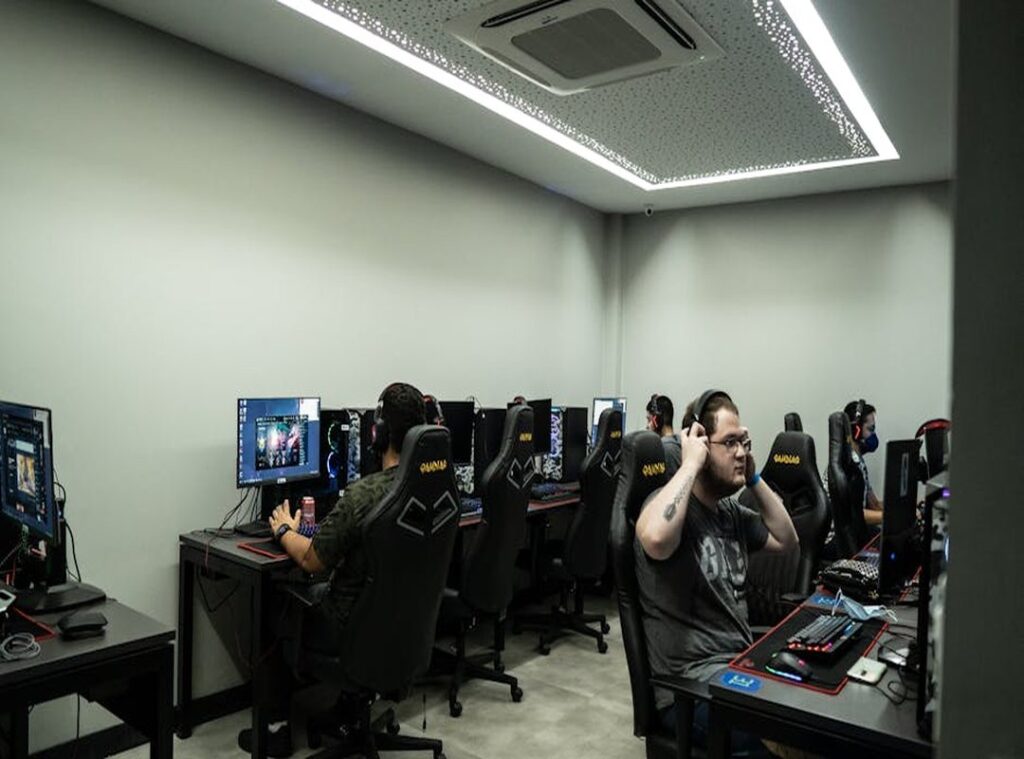
Esports gaming hmcdgaming covers that whole space. Not just the streamers or the pros. The people building the scaffolding.
You think coaching Dota 2 is a joke? Try managing burnout across 12-hour practice days while juggling visa paperwork for an international roster.
The barrier isn’t talent alone. It’s discipline. Consistency.
Showing up when no one’s watching.
Colleges didn’t build programs because it was trendy. They built them because enrollment spiked. Because employers started hiring from those rosters.
So if you’re still asking “Is this real?”. Go sit in on a university esports plan class. Then tell me it’s not.
It is.
Esports: Real Problems, Not Just Hype
I’ve watched players collapse mid-tournament. Not from injury. burnout. Their schedules are brutal.
Sixteen-hour practice days. Zero off-season. You think athletes in traditional sports push hard?
Try doing that with no union, no guaranteed contract, and a fanbase that moves on if your game drops in rank.
That’s the first real problem: human cost.
Then there’s the instability. One year League of Legends is everywhere. Next year?
You’re Googling Is Lol Still in Garena Hmcdgaming because the regional server shut down and half the scene scrambled.
Games rise. Games fall. Careers vanish overnight.
And yes. The “is it a real sport?” question still pops up. But let’s be clear: it’s not about skill.
It’s about perception. Older folks see screens and assume it’s passive. Meanwhile, pro players hit 400 APM, manage split-second plan under crushing pressure, and train like Olympians.
The gap is closing. Fast.
Are Esports Popular Hmcdgaming? Sure (if) you’re asking whether people watch, bet, and care. But popularity doesn’t fix burnout.
Doesn’t stabilize leagues. Doesn’t guarantee pay.
It just means more eyes on the same old problems.
Player burnout is the quiet crisis no one budgets for.
You Already Know the Answer
Esports is real. Not coming. Not maybe.
It’s here.
Are Esports Popular Hmcdgaming? Yes. The numbers don’t lie.
Millions watching. Billions invested. Universities offering scholarships.
Stadiums selling out.
You’ve heard the doubt. I have too. “It’s just kids playing games.” Right. Until you see a tournament final with 4 million live viewers.
The proof isn’t in the press releases. It’s in the crowd noise. The twitch of a pro’s finger.
The silence before a clutch play.
So stop wondering.
Pick one game. League. Valorant.
CS2. Doesn’t matter.
Find an upcoming tournament on Twitch or YouTube.
Watch for thirty minutes. Just thirty.
See if the energy hits you.
It will.
Your turn.
 There is a specific skill involved in explaining something clearly — one that is completely separate from actually knowing the subject. Helena Walkerbergh has both. They has spent years working with fntk powerlifting protocols in a hands-on capacity, and an equal amount of time figuring out how to translate that experience into writing that people with different backgrounds can actually absorb and use.
Helena tends to approach complex subjects — FNTK Powerlifting Protocols, Gym Performance Foundations, Strength Training Techniques being good examples — by starting with what the reader already knows, then building outward from there rather than dropping them in the deep end. It sounds like a small thing. In practice it makes a significant difference in whether someone finishes the article or abandons it halfway through. They is also good at knowing when to stop — a surprisingly underrated skill. Some writers bury useful information under so many caveats and qualifications that the point disappears. Helena knows where the point is and gets there without too many detours.
The practical effect of all this is that people who read Helena's work tend to come away actually capable of doing something with it. Not just vaguely informed — actually capable. For a writer working in fntk powerlifting protocols, that is probably the best possible outcome, and it's the standard Helena holds they's own work to.
There is a specific skill involved in explaining something clearly — one that is completely separate from actually knowing the subject. Helena Walkerbergh has both. They has spent years working with fntk powerlifting protocols in a hands-on capacity, and an equal amount of time figuring out how to translate that experience into writing that people with different backgrounds can actually absorb and use.
Helena tends to approach complex subjects — FNTK Powerlifting Protocols, Gym Performance Foundations, Strength Training Techniques being good examples — by starting with what the reader already knows, then building outward from there rather than dropping them in the deep end. It sounds like a small thing. In practice it makes a significant difference in whether someone finishes the article or abandons it halfway through. They is also good at knowing when to stop — a surprisingly underrated skill. Some writers bury useful information under so many caveats and qualifications that the point disappears. Helena knows where the point is and gets there without too many detours.
The practical effect of all this is that people who read Helena's work tend to come away actually capable of doing something with it. Not just vaguely informed — actually capable. For a writer working in fntk powerlifting protocols, that is probably the best possible outcome, and it's the standard Helena holds they's own work to.