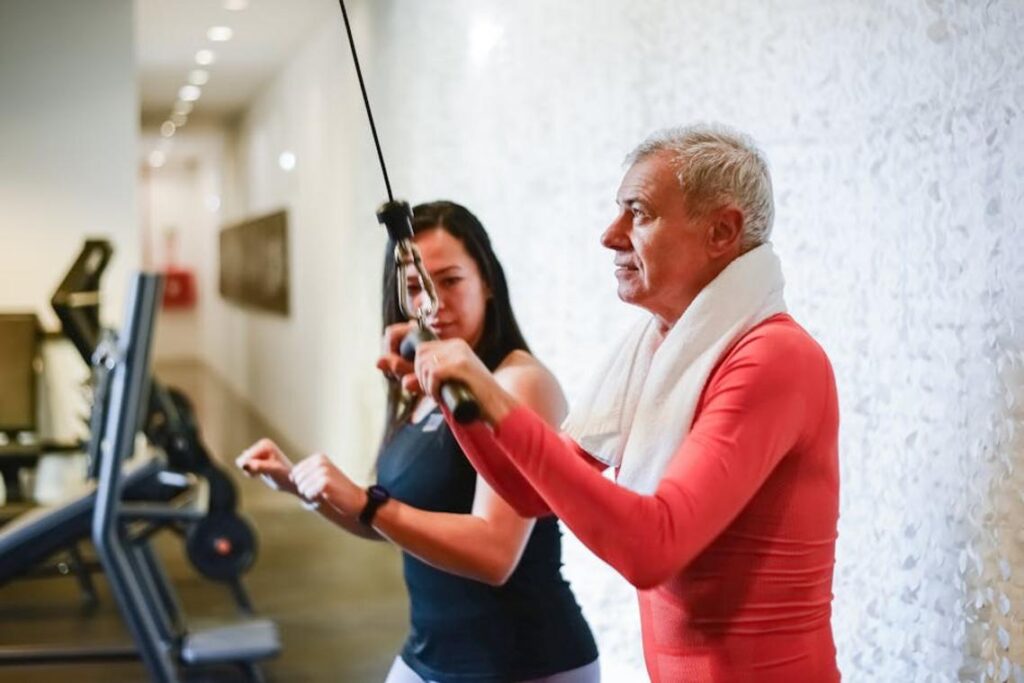
I’ve trained hundreds of people who walked into the gym with no idea what they were doing.
You’re probably tired of wandering around the weight room hoping you’re doing something that works. Or maybe you’ve been following random workout videos that don’t connect to any real plan.
Here’s the truth: most people waste their gym time because they don’t have a structure. They just show up and wing it.
This fntkgym gymansium guide from fitness-talk gives you a complete framework for building workouts that actually get results. Not complicated routines that require a PhD in exercise science. Just proven principles that work.
I use the same foundations we apply for athletic performance and game day prep. The difference is I’ve adapted them so you can use them for your own goals, whether that’s getting stronger or just feeling better.
You’ll learn how to structure your workouts from start to finish. Which exercises matter most. And you’ll get sample routines you can start using tomorrow.
No more guessing. No more wasted sessions.
Just a clear plan you can follow.
The Core Foundations: Principles of Smart Training
You can’t build strength on shaky ground.
I see people at fntkgym all the time who want results yesterday. They load up the bar, grind through terrible reps, and wonder why they’re not getting anywhere.
Here’s what actually works.
Progressive overload is the only rule that matters for getting stronger. You add weight. You add reps. You add sets. But you do it gradually. Not every session needs to be a personal record (your body isn’t a machine that scales linearly).
Some trainers will tell you to go hard or go home. That intensity is everything.
But I’ve watched that approach burn people out in weeks. They show up once, destroy themselves, then skip the next three sessions because they can barely walk.
Consistency beats intensity every single time. Showing up four days a week with good effort will always outperform one heroic workout followed by a week on the couch. You’re building momentum, not collecting war stories.
Now here’s where people get it wrong.
They think lifting is just moving weight from point A to point B. But the mind-muscle connection changes everything. When you actually focus on contracting the target muscle, when you feel it working through each rep, that’s when growth happens.
And none of this matters if your form is garbage.
Form first, weight second. Always. I don’t care what the person next to you is lifting. Bad technique with heavy weight just gets you hurt. Proper technique with moderate weight gets you results and keeps you training for years.
That’s the foundation. Everything else builds from here.
Anatomy of a Perfect Workout Session
Most people walk into the gym and just start lifting.
No prep. No plan. No structure.
Then they wonder why their joints hurt or why they’re not seeing results.
Here’s what actually works.
The Dynamic Warm-Up (5-10 minutes)
You need to wake your body up before you ask it to perform.
I start with leg swings. Front to back, side to side. Gets my hips loose and ready to move. Then arm circles, both directions, to open up my shoulders.
Cat-cow stretches are next (yes, even if you’re not doing yoga). Your spine needs to move through its full range before you load it with weight.
Finish with light cardio. Jump rope, jog in place, or hit the bike for a few minutes. You want blood flowing to your muscles and your heart rate up just enough that you’re ready to work. To maximize your gaming performance and keep your reflexes sharp, incorporating light cardio, such as jumping rope or jogging in place, is essential, as highlighted in the Fntkgym fitness guide. To enhance your gaming performance and keep your reflexes sharp, consider incorporating light cardio into your routine, much like the approach advocated by Fntkgym, where even a few minutes of jumping rope or jogging in place can significantly elevate your focus and stamina.
The benefit? You’ll lift heavier and move better. Plus you’ll actually enjoy your workout instead of feeling stiff and creaky through the first three sets.
The Main Workout (40-50 minutes)
This is where you earn your progress.
Start with your big compound lifts. Squats, deadlifts, bench press, overhead press. These movements work multiple muscle groups and demand the most energy. That’s why they come first, when you’re fresh.
After that, move to accessory work. These are your isolation exercises that target specific muscles you want to develop. The fntkgym gymansium guide from fitness-talk breaks this down in detail if you want more specifics.
What’s in it for you? You build real strength that carries over to everything else you do. And you actually see the muscle development you’re after.
The Cool-Down (5-10 minutes)
Don’t skip this part.
I know you’re tired. I know you want to get out of there. But five minutes of static stretching will save you days of soreness.
Hit the major muscle groups you just worked. Hold each stretch for 20 to 30 seconds. Your hamstrings, quads, chest, and shoulders all need attention.
The payoff is simple. Better flexibility over time and way less muscle soreness tomorrow. You’ll actually be able to train again in a day or two instead of hobbling around like you got hit by a truck.
The Pillars of Strength: Essential Compound Exercises
You’ve probably heard someone say compound exercises are overrated.
That isolation work is where the real gains happen. That you need to target each muscle individually to see results.
I disagree.
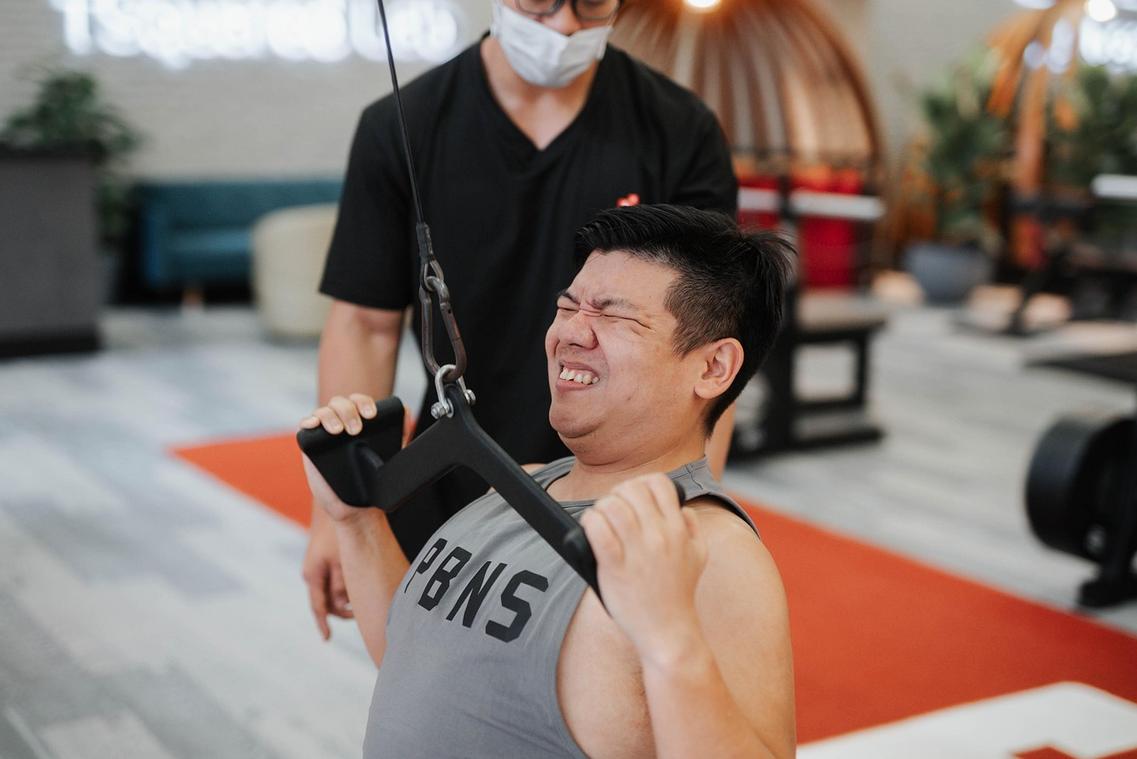
Here’s why. Your body doesn’t work in isolation. When you pick something heavy off the ground or push a box overhead, multiple muscles fire together. That’s how we’re built to move.
Compound exercises are multi-joint movements that work several muscle groups at once. Think of them as the foundation of any serious training program. Pros and Cons of Weight Training Fntkgym builds on exactly what I am describing here.
Some trainers will tell you to skip the big lifts. They say compounds are too risky or that machines are safer. And sure, bad form on a heavy squat can hurt you.
But avoiding these movements altogether? That’s leaving serious strength on the table.
Let me walk you through the ones that matter most.
The Squat hits your quads, glutes, hamstrings and core all at once. Keep your chest up, back straight, and push your hips back like you’re sitting in a chair. This movement builds lower body power better than anything else.
The Deadlift works your entire posterior chain plus your back and grip. It’s the closest thing to pure functional strength you’ll find in a fntkgym gymnasium guide from fitness-talk. You’re literally just picking weight off the floor.
The Bench Press remains the go-to for chest, shoulders and triceps development. It’s the upper body push that builds pressing strength across the board.
The Overhead Press creates shoulder strength and stability you can’t get anywhere else. Your entire upper body has to work to keep that bar moving straight up.
The Barbell Row builds back thickness and balances out all that pressing work. A strong back supports every other lift you do.
Want to make these work better? Grab some pre workout supplements fntkgym before your session.
These five movements cover everything you need.
Building Blocks: Key Accessory Exercises
I remember the first time someone told me accessory work mattered.
I was six months into lifting and my bench press had stalled hard. My coach watched me struggle through a set and said something I’ll never forget: “Your chest isn’t the problem. Your triceps are giving out first.” As I focused on strengthening my triceps to break through my bench press plateau, I stumbled upon a valuable resource titled “How to Keep Your Gym Pest Free Fntkgym,” which not only emphasized the importance of maintaining a clean workout environment but also inspired me to elevate my entire training regimen. As I dedicated myself to enhancing my triceps strength to overcome my bench press plateau, I also discovered the importance of maintaining a clean workout environment, leading me to research “How to Keep Your Gym Pest Free Fntkgym” for optimal performance and focus.
He was right.
That’s when I learned that accessory exercises isolate specific muscles to support your main lifts. They address weaknesses you didn’t know you had and build a physique that actually works together.
Think of them as the supporting cast that makes the main lifts shine.
Upper Body Accessories
Pull-ups or lat pulldowns build back width. They hit muscles your rows don’t fully reach and give you that V-taper everyone wants.
Dumbbell flyes isolate your chest without taxing your shoulders and triceps. I do these after my heavy pressing and the pump is unreal.
Lateral raises create shoulder width. Your overhead press works the front delts but these hit the sides (which is where that broad shoulder look comes from).
Then you’ve got bicep curls and tricep pushdowns. Yeah, they’re simple. But they work. Your arms need direct attention if you want them to grow.
Lower Body Accessories
Lunges build unilateral strength. They fix imbalances between your legs that squats alone won’t catch.
Leg press lets you hammer your quads with less lower back fatigue. Great for volume work when you’re already beat up from squatting.
Hamstring curls isolate the backs of your legs. Deadlifts work them but not enough for most people.
Calf raises are pretty self-explanatory. Do them or accept small calves forever.
Core Work
Your core gets worked during compound lifts. But it benefits from direct work too.
Planks teach you to brace under tension. Leg raises hit your lower abs. Cable crunches let you add weight as you get stronger.
The fntkgym gymansium guide from fitness-talk breaks down how to program these based on your weak points.
Pick three to five accessories per session. Do them after your main lifts. Keep it simple and watch everything else improve.
Putting It All Together: Sample Workout Splits
You’ve probably heard people say that workout splits don’t matter for beginners.
Just show up and lift, right?
I disagree. Having a clear plan makes all the difference between walking into the gym confused and actually getting stronger.
Here’s what works.
3-Day Full Body Split
This is where most people should start. You hit everything three times a week and go home.
- Squats 3×5
- Bench Press 3×5
- Barbell Row 3×5
- Face Pulls 3×12
- Planks 3x60s
Simple. You’re done in under an hour.
Some trainers will tell you this isn’t enough volume. They’ll say you need more exercises and more days to see results.
But here’s what they’re missing. Beginners don’t need volume. They need consistency and proper form. This split lets you practice the big movements without burning out.
4-Day Upper/Lower Split
Once you’ve built a base, this is your next step.
The split looks like this: Upper, Lower, Rest, Upper, Lower.
Sample Upper Day:
- Bench Press 4×6
- Barbell Row 4×8
- Overhead Press 3×8
- Pull-ups 3×8
Sample Lower Day:
- Squats 4×6
- Romanian Deadlifts 3×8
- Leg Press 3×10
- Leg Curls 3×12
You get more work in without spending your whole life at the gym. And if you’re serious about keeping your training space clean (which you should be), check out how to keep your gym pest free Fntkgym. To maximize your efficiency in the gym and maintain a clean training environment, consider incorporating Pre Workout Supplements Fntkgym into your routine for that extra boost you need. To maximize your efficiency in the gym and maintain a clean training environment, consider incorporating Pre Workout Supplements Fntkgym into your routine for an extra boost that helps you achieve more in less time.
Pick one. Stick with it for at least 12 weeks.
That’s how you actually get results.
From Plan to Performance
You now have what you need to make every gym session count.
The foundational principles are clear. The exercises are mapped out. The structured plans give you a roadmap from day one.
No more wandering the gym floor wondering what to do next.
That uncertainty kept you from making real progress. It wasted your time and energy on movements that didn’t build toward anything.
This fntkgym gymnasium guide from fitness-talk changes that.
When you focus on core foundations and stick with consistent progression, you build real athletic capability. You create momentum that carries you forward even on tough days.
Here’s your next move: Pick one of the sample splits that fits your schedule. Lock in your form on the basic movements. Start building your stronger self today.
This is your game day prep for a healthier life. The plan is in your hands now.
 There is a specific skill involved in explaining something clearly — one that is completely separate from actually knowing the subject. Veslina Xelthorne has both. They has spent years working with strength training techniques in a hands-on capacity, and an equal amount of time figuring out how to translate that experience into writing that people with different backgrounds can actually absorb and use.
Veslina tends to approach complex subjects — Strength Training Techniques, Athletic Conditioning Tactics, Momentum Moments being good examples — by starting with what the reader already knows, then building outward from there rather than dropping them in the deep end. It sounds like a small thing. In practice it makes a significant difference in whether someone finishes the article or abandons it halfway through. They is also good at knowing when to stop — a surprisingly underrated skill. Some writers bury useful information under so many caveats and qualifications that the point disappears. Veslina knows where the point is and gets there without too many detours.
The practical effect of all this is that people who read Veslina's work tend to come away actually capable of doing something with it. Not just vaguely informed — actually capable. For a writer working in strength training techniques, that is probably the best possible outcome, and it's the standard Veslina holds they's own work to.
There is a specific skill involved in explaining something clearly — one that is completely separate from actually knowing the subject. Veslina Xelthorne has both. They has spent years working with strength training techniques in a hands-on capacity, and an equal amount of time figuring out how to translate that experience into writing that people with different backgrounds can actually absorb and use.
Veslina tends to approach complex subjects — Strength Training Techniques, Athletic Conditioning Tactics, Momentum Moments being good examples — by starting with what the reader already knows, then building outward from there rather than dropping them in the deep end. It sounds like a small thing. In practice it makes a significant difference in whether someone finishes the article or abandons it halfway through. They is also good at knowing when to stop — a surprisingly underrated skill. Some writers bury useful information under so many caveats and qualifications that the point disappears. Veslina knows where the point is and gets there without too many detours.
The practical effect of all this is that people who read Veslina's work tend to come away actually capable of doing something with it. Not just vaguely informed — actually capable. For a writer working in strength training techniques, that is probably the best possible outcome, and it's the standard Veslina holds they's own work to.