I’ve been asked the cardio vs weight training question more times than I can count at FNKT Gym.
You’re probably stuck trying to figure out which one deserves more of your time. Should you hit the treadmill or the squat rack first? Maybe you’re doing both but wondering if you’re wasting effort.
Here’s the truth: most people split their energy between cardio and weights without a real plan. Then they wonder why their progress stalls.
I’m going to show you exactly how each type of training affects your body. Not the generic advice you see everywhere. The real differences that matter for your specific goals.
Our programs are built on sports science principles that actually work. We’ve tested these methods with athletes and everyday gym members who want results, not theories.
This article answers one question directly: which is better for your goals, cardio or weight training?
You’ll learn when to prioritize one over the other. How to structure your workouts so nothing goes to waste. And why the answer might be different than what you think.
No fluff about finding balance or doing what feels right. Just what works based on what you’re trying to achieve.
Defining the Disciplines: The Core Foundations of Movement
Your body doesn’t care what you call your workout.
It only responds to what you actually do.
What is Cardiovascular Exercise?
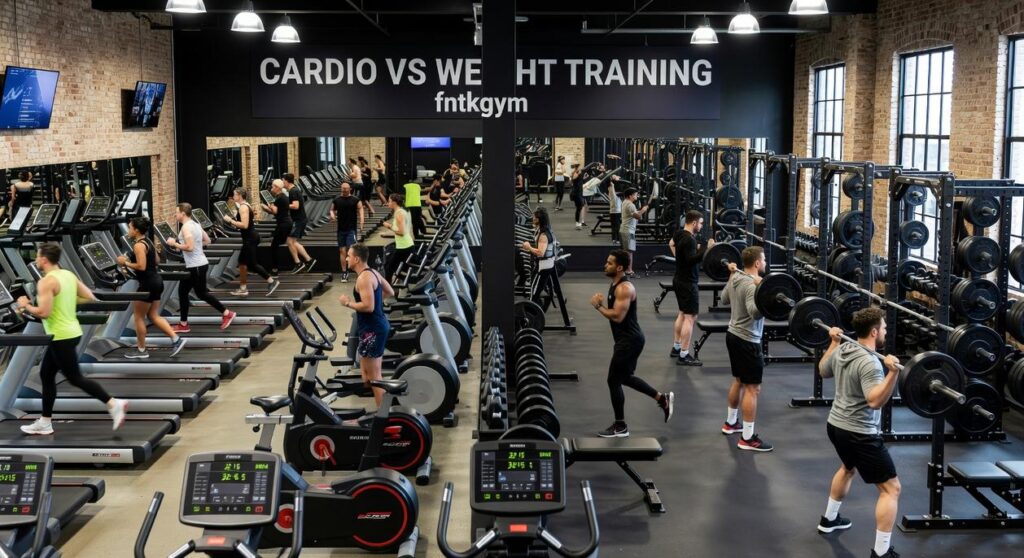
Cardio is about oxygen. When you hop on a treadmill or hit the elliptical, your heart pumps faster to deliver oxygen to your muscles. Your lungs work harder. Your blood moves quicker.
This is aerobic training. Your body uses oxygen to burn fuel over longer periods.
At most gyms, you’ll find treadmills for running or walking. Ellipticals that go easy on your joints. Stationary bikes in the cycle studio. Rowing machines (if you’re lucky). Each one keeps your heart rate up for extended periods.
What is Weight Training?
Weight training works differently. You’re lifting heavy things for short bursts. Your muscles don’t have time to use oxygen the way they do during cardio vs weight training fntkgym sessions.
This is anaerobic training. It breaks down muscle fibers so they rebuild stronger and bigger. That’s hypertrophy.
You can use free weights like dumbbells and barbells. Machine circuits that guide your movement. Or functional resistance training with kettlebells and bands.
The Key Difference
Here’s what matters.
Cardio trains your aerobic energy system. It makes your heart and lungs better at delivering oxygen. You build endurance.
Weight training trains your anaerobic system. It makes your muscles stronger and larger. You build power.
Different fuel sources. Different adaptations. Both matter.
Head-to-Head for Fat Loss: Calories, Metabolism, and Results
Let me settle this once and for all.
You’ve probably heard both sides. Cardio people swear by their treadmill sessions. Weight training folks say lifting is the only way to really burn fat.
Here’s what actually happens.
Cardio’s Role: The Calorie Burn Champion
Think of cardio like writing a big check right now. You hop on the bike for 45 minutes and you might burn 400 to 600 calories in that session. It’s immediate. It’s measurable. When you think of cardio as a valuable investment in your health, much like the commitment you make at Fntkgym, each session becomes a step towards measurable progress that can transform your fitness journey. …each session becomes a crucial step towards a healthier lifestyle, reinforcing the commitment you make at Fntkgym to prioritize your well-being.
That’s why cardio works so well for creating a caloric deficit. You need to burn more than you eat, and cardio delivers those numbers fast.
But here’s where it gets interesting.
Weight Training’s Secret Weapon: The ‘Afterburn’ Effect
Weight training is more like setting up a monthly payment plan that runs on autopilot.
When you lift, you trigger something called Excess Post-exercise Oxygen Consumption or EPOC. Your body keeps burning calories for hours after you’re done. Not as many as during cardio, sure. But it adds up.
The real game changer? Building muscle increases your resting metabolic rate. More muscle means your body burns more calories just sitting on the couch. According to research, each pound of muscle burns about 6 calories per day at rest (not the crazy numbers you sometimes hear, but it matters).
The Verdict for Fat Loss
So which wins the cardio vs weight training fntkgym debate?
Neither. Or both, depending on how you look at it.
Cardio creates the immediate deficit you need. Weight training builds a body that burns more around the clock.
You want results that last? Do both.
Head-to-Head for Muscle & Strength: Building a Powerful Physique
Let me settle this right now.
If you want to build muscle and get stronger, weight training wins. Period.
I know some people swear by their cycling routine or their daily runs. They’ll tell you cardio built their legs or transformed their body. And sure, beginners might see some leg development from sprinting or biking uphill.
But that’s not the whole story.
Here’s what actually builds muscle. Two things: progressive overload and mechanical tension. You need to lift heavier weights over time and put your muscles under real stress. That’s it. Pre Workout Supplements Fntkgym builds on exactly what I am describing here.
Your muscles don’t grow because your heart rate went up. They grow because you forced them to adapt to resistance they couldn’t handle before.
Can you do some squats with a barbell and feel your quads burn? Absolutely. Can you run five miles and feel that same growth stimulus? Not even close.
Now here’s where it gets interesting (and where most fntkgym gym tips by fitnesstalk miss the mark).
There’s something called the interference effect. When you do too much high-intensity cardio alongside your strength work, your body gets confused. It can’t recover properly. Your strength gains stall out because you’re asking your system to adapt in opposite directions at once.
I’m not saying cardio is bad. But if muscle and strength are your goals, it can’t be your main tool.
The verdict on cardio vs weight training fntkgym is simple. Weight training isn’t optional. It’s the foundation. Everything else is just support work.
The Athlete’s Choice: Optimizing for Performance and Game Day Prep
I’ll never forget watching a college teammate gas out in the fourth quarter of our biggest game.
He could bench press a truck. But after three quarters of running up and down the court, his legs were done. We lost by six points.
That’s when it hit me. Being strong doesn’t mean much if you can’t sustain it.
Building the Engine with Cardio
Your cardiovascular system is what keeps you going when everyone else is slowing down. It’s not just about running longer. It’s about recovering faster between plays and maintaining your speed in the final minutes. To ensure your cardiovascular system performs at its peak, allowing for faster recovery and sustained speed in the final minutes of your game, you might be wondering, “Which Pre Workout Should I Buy Fntkgym? To optimize your endurance and recovery during those crucial gaming sessions, you might be wondering, “Which Pre Workout Should I Buy Fntkgym” to enhance your cardiovascular performance and keep your energy levels high until the very last play.
When your heart and lungs work better, you bounce back quicker. That matters whether you’re playing basketball or competing in CrossFit.
Building the Chassis with Weights
But cardio alone won’t cut it either.
Strength training builds the power you need to explode off the line. It protects your joints and muscles from the beating they take during competition. A stronger body is a more durable body.
I’ve seen too many athletes skip the weight room and end up sidelined with preventable injuries. How to Keep Your Gym Pest Free Fntkgym builds on the same ideas we are discussing here.
Sport-Specific Programming
Here’s where the cardio vs weight training fntkgym debate gets interesting.
Your sport dictates your split. A marathon runner needs a different approach than a football linebacker. Soccer players need both endurance and explosive power in equal measure.
The key is knowing what your sport demands and building your program around that.
The Verdict for Athletes
You need both. Period.
Smart athletes cycle through phases. Build strength in the off-season. Maintain it during competition while ramping up sport-specific conditioning. (And yes, figuring out which pre workout should i buy fntkgym helps fuel those sessions.)
The athletes who dominate? They don’t pick sides. They build complete systems.
The Unified Strategy: How to Combine Cardio and Weights at the Gym
You walk into the gym and face the same question every time.
Treadmill first or weights?
I hear this constantly. People want to know the right way to mix cardio and strength training. And honestly, there isn’t one perfect answer that works for everyone.
But there are three solid approaches.
Let me break them down so you can pick what actually fits your goals.
Option 1: Different Days
This is the cleanest split. You do cardio on Monday and Wednesday. Weights on Tuesday and Thursday. (Or whatever schedule works for you.)
Why it works? Your body gets focused work. You’re not trying to do everything in one session.
When you separate them, you can go hard on both. No compromises.
Option 2: Same Day (Weights First)
Here’s what I recommend for most people.
Hit the weights when you’re fresh. Then finish with cardio.
Why? Because lifting heavy requires your full attention and energy. You need good form. You need power. If you’re already tired from running, your lifts suffer.
This approach to cardio vs weight training fntkgym sessions gives you the best of both worlds. You build strength first, then work on conditioning.
Option 3: Same Day (Cardio First)
I’ll be straight with you. This only makes sense in specific situations.
Use 5 to 10 minutes of light cardio as a warm-up before lifting. That’s smart. It gets blood flowing and prepares your body.
Or choose this if endurance is your main goal and strength is secondary. Marathon runners do this. But if you want to get stronger? Weights come first. For those looking to balance endurance with strength, the “Fntkgym Gym Tips by Fitnesstalk” offer invaluable insights on prioritizing weights for optimal muscle gain while still enhancing stamina. For those eager to strike a balance between endurance and strength training, the “Fntkgym Gym Tips by Fitnesstalk” provide essential strategies to effectively integrate weightlifting into your routine without compromising your endurance goals.
Pick the option that matches where you’re headed.
Designing Your Perfect Workout Split
You came here with a question: cardio or weights?
I get it. The gym can feel overwhelming when everyone’s telling you something different.
Here’s the truth. You don’t have to choose between cardio vs weight training fntkgym. That’s a false choice that wastes your time and keeps you spinning your wheels.
The best results come from combining both. Smart programming means using each type of training for what it does best.
Cardio builds your engine. Weights build your frame. Together they create the body and performance you’re after.
You now understand how each one works and what it can do for your specific goals. No more guessing or following random workout plans that don’t fit what you need.
Here’s what to do next: Map out your workout week using what you learned. Decide how many days you’ll train and split your cardio and weight sessions based on your priorities.
If you want a plan built specifically for you, talk to one of our expert trainers. They’ll take your goals and create a program that actually works.
Stop wasting time on the wrong approach. Start training with purpose.
 There is a specific skill involved in explaining something clearly — one that is completely separate from actually knowing the subject. Veslina Xelthorne has both. They has spent years working with strength training techniques in a hands-on capacity, and an equal amount of time figuring out how to translate that experience into writing that people with different backgrounds can actually absorb and use.
Veslina tends to approach complex subjects — Strength Training Techniques, Athletic Conditioning Tactics, Momentum Moments being good examples — by starting with what the reader already knows, then building outward from there rather than dropping them in the deep end. It sounds like a small thing. In practice it makes a significant difference in whether someone finishes the article or abandons it halfway through. They is also good at knowing when to stop — a surprisingly underrated skill. Some writers bury useful information under so many caveats and qualifications that the point disappears. Veslina knows where the point is and gets there without too many detours.
The practical effect of all this is that people who read Veslina's work tend to come away actually capable of doing something with it. Not just vaguely informed — actually capable. For a writer working in strength training techniques, that is probably the best possible outcome, and it's the standard Veslina holds they's own work to.
There is a specific skill involved in explaining something clearly — one that is completely separate from actually knowing the subject. Veslina Xelthorne has both. They has spent years working with strength training techniques in a hands-on capacity, and an equal amount of time figuring out how to translate that experience into writing that people with different backgrounds can actually absorb and use.
Veslina tends to approach complex subjects — Strength Training Techniques, Athletic Conditioning Tactics, Momentum Moments being good examples — by starting with what the reader already knows, then building outward from there rather than dropping them in the deep end. It sounds like a small thing. In practice it makes a significant difference in whether someone finishes the article or abandons it halfway through. They is also good at knowing when to stop — a surprisingly underrated skill. Some writers bury useful information under so many caveats and qualifications that the point disappears. Veslina knows where the point is and gets there without too many detours.
The practical effect of all this is that people who read Veslina's work tend to come away actually capable of doing something with it. Not just vaguely informed — actually capable. For a writer working in strength training techniques, that is probably the best possible outcome, and it's the standard Veslina holds they's own work to.